
Gum Disease Treatment – Alice, TX
Treat Gum Disease and Help Protect Your Smile
Many people focus on their teeth when thinking about dental health, but your connective tissues are just as important. After all, without healthy gums, nothing would hold your teeth in place, which is why periodontitis, or advanced-stage gum disease, is the leading cause of permanent tooth loss in adults.
Although the earliest stage, gingivitis, is often preventable, it is also easy to miss because it doesn’t always show noticeable signs until it gets worse. Then, it doesn’t resolve itself, but Dr. Valadez offers professional services to treat gum disease and help protect your smile. Continue reading to learn more about it!
Why Choose Advanced Dental Care of South Texas for Gum Disease Treatment?
- Equipped with State-of-the-Art Technology
- Multiple Types of Sedation to Ease Anxiety
- Accept Dental Insurance & Flexible Financing
What is Gum Disease?

Your mouth is home to billions of bacteria representing hundreds of different species, and while some of these are beneficial and aid with essential processes, such as digestion, others contribute to oral issues. If unhealthy germs thrive, they can form plaque along the gumline and penetrate the tissues, which triggers an infection.
There are two stages of gum disease, outlined in more detail below:
- Gingivitis: This is the earliest and most commonly diagnosed stage, and can potentially be halted or even reversed by flossing more consistently after brushing your teeth twice daily.
- Periodontitis: If you develop gingivitis and don’t do anything to address it, it can evolve into this more advanced stage. In some cases, periodontitis can be managed but never fully cured. It is also associated with other more severe dental concerns, such as permanent tooth loss.
Symptoms of Gum Disease

Gingivitis can be difficult to identify because early signs can be easy to miss. You might have an issue if you notice the following:
- Darker or red gums.
- Oozing or bleeding when you brush and floss your teeth
- Sensitivity or tenderness in the tissues.
- Early gum recession (pulling away from the enamel).
- Halitosis, or chronic bad breath.
Meanwhile, periodontitis often presents with the following symptoms:
- Pain when biting down or chewing.
- Increased or prolonged sensitivity.
- Changes in your bite alignment.
- Destabilized adult teeth.
- Excessive gum recession.
- Permanent tooth loss.
How Do We Treat Gum Disease?

Like most other oral issues, periodontal problems don’t fix themselves and therefore require professional intervention. Once Dr. Valadez examines your mouth, he can devise a customized treatment plan to meet your needs. For example, he can help prevent, halt, or manage chronic gum disease with two-part deep cleanings known as scaling and root planing.
Scaling & Root Planing
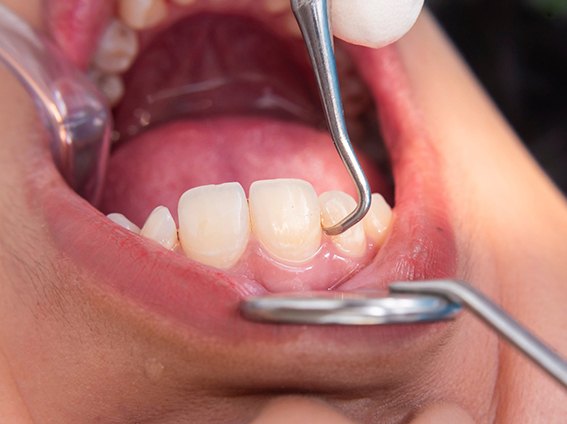
This tried-and-true method for treating periodontal problems typically requires at least two separate visits. During your first appointment, Dr. Valadez will assess your condition to identify gum disease and its severity. Then, before starting your procedure, our team will numb your mouth and/or provide sedation to help you feel calmer and more comfortable.
Next, we use specialized dental instruments to clear away even the most stubborn plaque and tartar buildup. We also carefully reach deeply into the pockets to remove any hidden bacteria.
Your tissues will need some time to recover, so we’ll schedule a follow-up appointment to complete your procedure. At your second visit, we will carefully smooth your enamel surfaces to prevent additional plaque deposits and encourage your gums to reattach.
Periodontal Maintenance
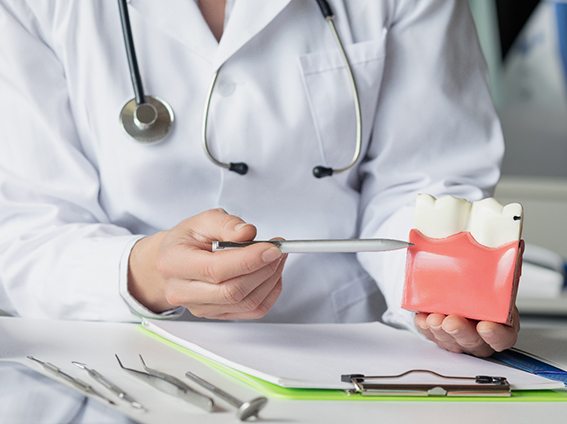
If your condition cannot be permanently cured, you will need to undergo scaling and root planing at more regular intervals to maintain your connective tissues, protect your smile, and avoid worsening problems, like losing adult teeth. Dr. Valadez can provide a customized treatment plan, including a recommended timeline based on your individual circumstances, so you know what to expect.